Hexagram 59: Dispersion
Hexagram
59. Dispersion · Huan
Structure of the sign
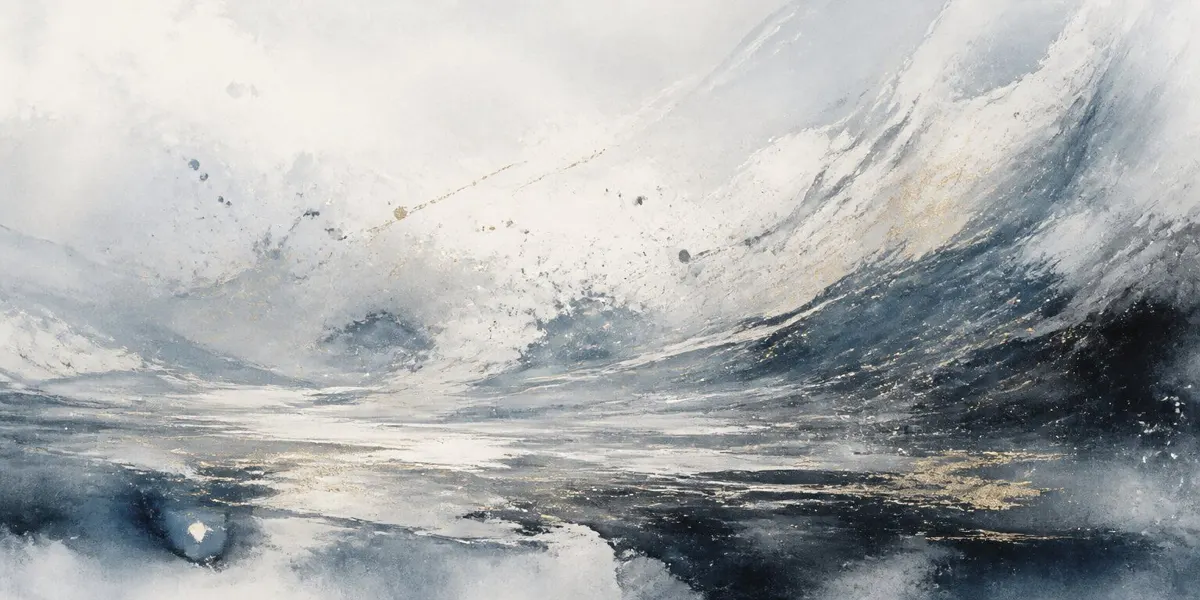
The wind moving above over the water disperses it, dissolving it into foam and mist. In this also lies the idea that when vital energy becomes congested in man (as indicated by the attribute of danger in the lower sign), it is dispersed and dissolved once more through gentleness.
The Judgment
Dispersion. Success. The king approaches his temple. It furthers one to cross the great water. Perseverance furthers. In its text, the sign bears a resemblance to the sign Ts'ui, 'Gathering Together' (No. 45). There it concerns the collecting of what is separated, as water gathers in lakes upon the earth. Here it concerns the dispersion and dissolution of divisive egotism. The sign 'Dispersion' shows, as it were, the path that leads to gathering together. Hence the similarity of the text is explained. To overcome the dividing egoism of men, religious forces are required. The shared celebration of the great sacrificial festivals and worship, which simultaneously expressed the coherence and social order of family and state, was the means employed by the great rulers to bring hearts, in a common surge of feeling through sacred music and the splendor of ceremonies, to the consciousness of the shared origin of all beings, whereby division was overcome and rigidity dissolved. Another means is cooperation in great common undertakings that set a lofty goal before the will and, directed toward this goal, dissolve all that divides, just as in a ship crossing a great stream, all passengers must unite in common work. Yet only one who is himself free from all selfish ulterior motives, abiding in righteousness and constancy, is capable of such dissolution of the hardness of egotism.
The Image
The wind drives across the water: the image of Dispersion. Thus the ancient kings sacrificed to the Lord and erected temples. In autumn and winter, water begins to harden and freeze into ice. When the mild airs of spring arrive, the rigidity dissolves, and that which was scattered in floes of ice reunites. So it is likewise with the mind of the people. Through hardness and selfishness the heart grows rigid, and in this rigidity it separates itself from all else. Egotism and greed isolate human beings. Therefore a devout emotion must seize the human heart. It must be dissolved in sacred intimations of eternity that stir it through the awareness of the common Creator of all beings and unite it through the power of fellowship in the sacred rite of worshiping the Divine.
The lines
Line 1
He brings help with the strength of a horse. Here it is a matter of overcoming the very first beginnings of division before separation has taken full effect; of dispersing the clouds before storm and rain have set in. In such times, when secret deviations of mood arise and mutual misunderstandings ensue, one must act swiftly and vigorously to dissolve these misunderstandings and mutual distrust. ±
Line 2
At the dispersion, he runs to his support. Remorse disappears. When one discovers within oneself the beginnings of alienation from others, of misanthropy and discontent, then it is necessary to disperse these obstructions. One must rouse oneself inwardly and hasten to one's support. Such support for man never lies in hatred, but always in a temperate and just estimation of men, paired with benevolence. When one regains this unhindered view of humanity, dispersing all melancholic ill humor, every cause for remorse vanishes.
Line 3
He dissolves his self. No remorse. Circumstances may render the work so arduous that one can no longer think of oneself. One must set one's own person entirely aside, dispersing all that the ego would gather divisively around itself. Only upon the foundation of great renunciation does one gain the power for great achievements. By having one's goal outside oneself in a great cause, one can attain this standpoint. ±
Line 4
He dissolves his bond with his group. Sublime good fortune! Dispersion is followed by accumulation. This is something of which ordinary men do not conceive. When working on a task that concerns the greater whole, one must set aside all private attachments. Only when standing above factions does one accomplish something decisive. Whoever dares this renunciation of what is near will win those who are distant. But one must possess a broad view of the interconnections of life, such as only extraordinary men attain, in order to comprehend this standpoint.
Line 5▶ ruling line
Dissolving like sweat are his loud cries. Dispersion! A king abides without blame. In times of general dispersion and separation, a great idea is the organizing center of recovery. Just as an illness reaches its crisis through relieving sweat, so in times of general stagnation a great, inspiring idea is a true deliverance. People have something around which they can rally, a commanding leader capable of dispersing misunderstandings.
Line 6
He dissolves his blood. Departing, keeping at a distance, going out is without blame. The dissolution of blood signifies dissolving whatever could bring blood and wounds, avoiding danger. Yet the thought expressed here is not merely that one avoids difficulties for oneself alone, but that one rescues one's own, helping them depart before danger arrives, holding aloof from a danger already present, and finding a way out of a danger that has already seized them. In this manner one does what is right.
Lower ☵ Water (Kan)
- Direction
- N
- Element
- Water · Moon
- Attributes
- Abysmal · Dangerous · Penetrating · Profound
- Family
- Middle Son
Upper ☴ Wind (Sun)
- Direction
- SE
- Element
- Wood · Wind
- Attributes
- Gentle · Penetrating · Gradual · Persevering
- Family
- Eldest Daughter