Hexagram 3: Difficulty at the Beginning
Hexagram
3. Difficulty at the Beginning · Dschun
Structure of the sign
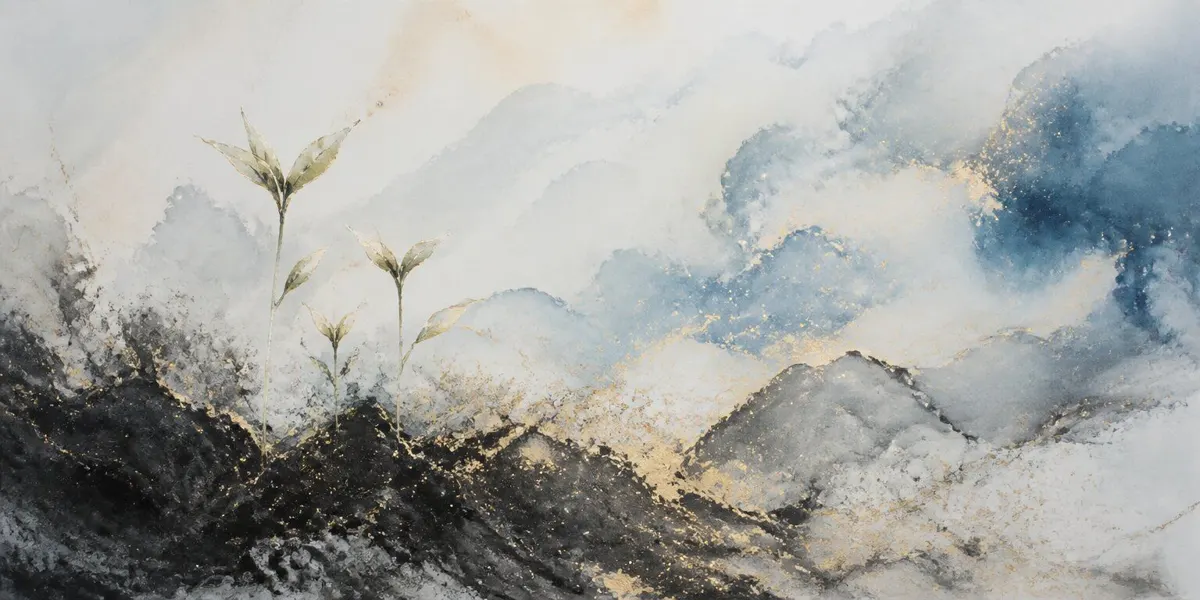
The name of the hexagram, Chun, actually represents a blade of grass that encounters an obstacle as it sprouts forth from the earth. From this arises the meaning of difficulty at the beginning. The hexagram indicates how heaven and earth bring forth individual beings. It is their first meeting, which is attended with difficulties. The lower trigram, Chên, is the Arousing; its movement is directed upward; its image is thunder. The upper trigram, K'an, is the Abysmal, the dangerous; its movement is directed downward; its image is rain. The situation thus points to dense, chaotic profusion. Thunder and rain fill the air. But the chaos clears. The movement directed upward, while the abysmal sinks downward, ultimately emerges from danger. In the thunderstorm the pent-up forces discharge, and everything breathes a sigh of relief.
The Judgment
Difficulty at the beginning works supreme success. Furthering through perseverance. Nothing should be undertaken. It furthers one to appoint helpers. Times of growth have their difficulties. It is like a first birth. But these difficulties arise from the profusion of that which struggles for form. Everything is in motion; therefore, despite the present danger, there is prospect of great success if one has perseverance. When such times of beginning arrive as fate, everything is still formless and dark. Therefore one must wait, for any premature grasping could bring failure. Likewise, it is of great importance not to remain alone. One must have helpers in order to master the chaos together with them. Yet this does not mean that one should merely look on at events in idleness; rather, one must lend a hand, inspiring and directing in all things.
The Image
Clouds and thunder: the image of Difficulty at the Beginning. Thus the superior man brings order out of confusion. Clouds and thunder are represented by determined linear ornaments, which means that within the chaos of difficulty at the beginning, order is already implicit. Thus in such times of beginning, the superior man must divide and arrange the confusing profusion, just as one unravels silk threads from a tangled knot and joins them into skeins. In order to find one's way in the infinite, one must distinguish and unite.
The lines
Line 1▶ ruling line
Hesitation and hindrance. It furthers one to remain persevering. It furthers one to appoint helpers. When encountering hindrance at the beginning of an enterprise, one must not attempt to force progress, but must pause circumspectly. Yet one must not allow oneself to be led astray; rather, one must continuously and steadfastly keep one's goal in view. It is important to seek the right assistants. These are found only if one associates with people in humility and without arrogance. Only thus do people attach themselves to one, with whose help one can tackle the difficulties.
Line 2
Difficulties pile up. Horse and wagon part. Not a robber is he, he comes to woo in due time. The maiden is chaste, she pledges not herself. Ten years, then she pledges herself. One finds oneself in difficulty and hindrance. Then a sudden turn appears, as though someone were arriving with carriage and horses and unhitching them. This event occurs so unexpectedly that one suspects the newcomer to be a robber. Gradually it becomes apparent that he has no evil intentions, but seeks a friendly union and offers relief. Yet one does not accept the offer, since it does not come from the right quarter; instead, one waits until the time is fulfilled—ten years is a complete cycle, a fulfilled period of time. Then normal conditions return of their own accord, and one can unite with the friend destined for one. Under the image of a bride who remains faithful to her beloved amidst severe conflicts, counsel is given for a particular situation in life: when in times of difficulty, encountering hindrance, relief is unexpectedly offered from a quarter with which one has no relation, one should be cautious and assume no obligations such as would follow from such aid, for otherwise one's freedom of decision would be impaired. If one bides one's time, quiet conditions will return, and one attains what was hoped for.
Line 3
Whoever hunts the deer without the forester only loses his way in the forest. The superior man understands the signs of the times and prefers to desist. Going on brings humiliation. If one has no guide and attempts to hunt in an unfamiliar forest, one loses one's way. One must not attempt to steal out of the difficulties in which one stands thoughtlessly and without guidance. Fate will not be deceived. Hasty striving without the requisite direction leads to failure and disgrace. Therefore the superior man, discerning the seeds of what is to come, would rather renounce a wish than incur failure and humiliation by attempting to force it.
Line 4
Horse and wagon part. Strive for union. Going brings good fortune. Everything works to further. One is in a situation where one has the duty to act, but one's strength does not suffice. Yet an opportunity presents itself to find an alliance. Here one must seize the moment. One must not allow oneself to be held back by false pride and false reserve. It is a sign of inner clarity when one can bring oneself to take the first step, even if a certain self-abnegation is connected with it. In a difficult situation it is no disgrace to accept help. If one finds the right helper, all goes well.
Line 5▶ ruling line
Difficulties in blessing. Small perseverance brings good fortune, great perseverance brings misfortune. One finds oneself in a position where one has no opportunity to express one's good intentions in such a way that they actually take effect and are understood. Others interpose themselves and distort everything one does. In such a case one must be cautious and proceed gradually. One must not seek to force anything great; for such things succeed only when one already enjoys general confidence. Only quietly, through faithful and conscientious work, can one gradually bring about the clarification of conditions and the removal of the hindrance.
Line 6
Horse and wagon part. Bloody tears flow. There are people for whom the initial difficulties prove too severe. They become stuck and can no longer find their way through. They drop their hands and give up the struggle. Such renunciation is among the saddest of things. Therefore Confucius remarks concerning this: 'Bloody tears flow: one must not persist in this.'
Below ☳ Thunder (Dschen)
- Direction
- E
- Element
- Wood · Thunder
- Attributes
- Arousing · Awakening · Impelling · Moving
- Family
- Eldest Son
Above ☵ Water (Kan)
- Direction
- N
- Element
- Water · Moon
- Attributes
- Abysmal · Dangerous · Penetrating · Profound
- Family
- Middle Son